
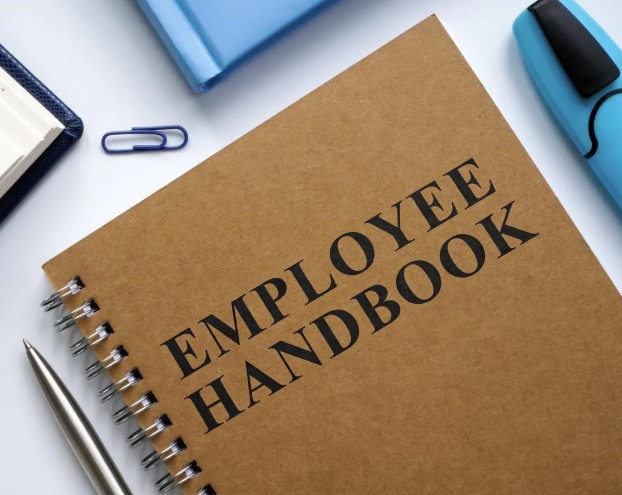
Although there is no legal requirement that employers maintain an employee handbook, it often is the most important employment-related document a business possesses.
Whether creating one for the first time or updating an outdated version, employers should ensure their handbook reflects current workforce size, specific business practices, and applicable employment laws.
The Value of an Employee Handbook
An employee handbook provides the foundation for handling workplace matters in a fair and consistent manner. It introduces employees to the organization, explains workplace rules and expectations, outlines benefits, and defines employee rights and responsibilities.
Because every business operates differently, a handbook should be customized to reflect the employer’s industry, culture, and operations. When thoughtfully prepared, a handbook promotes clear communication, improves administrative efficiency, and helps reduce legal risk.
Promoting Clear Workplace Communication
A well-written handbook removes uncertainty by clearly describing company policies and expectations. Without documented policies, employees may misunderstand their responsibilities or workplace standards.
A comprehensive handbook establishes consistent guidelines and replaces informal or inconsistent statements that may be made by management.
It should also reserve management’s right to revise policies—particularly benefits—to prevent misunderstandings if changes occur in the future. Clear explanations of policies and their purpose help employees understand expectations and encourage compliance.
By contrast, generic or “cookie-cutter” handbooks that do not reflect actual business practices may create confusion and potentially increase legal exposure.
Supporting Consistent Management Practices
Documented policies help managers address personnel matters more consistently and efficiently. When expectations and possible consequences are clearly defined, workplace disputes are easier to resolve and administrative burdens are reduced.
Disciplinary policies should outline standards of conduct and potential consequences while maintaining management’s discretion to determine appropriate action based on the circumstances. Employers should avoid overly rigid, step-by-step discipline policies that may unnecessarily limit flexibility.
Reducing Exposure to Legal Claims
When carefully drafted and consistently applied, an employee handbook can also serve as an important safeguard in employment disputes. For example, employers that maintain clear anti-harassment policies and complaint procedures may reduce liability if an employee fails to use internal reporting channels before pursuing external claims.
A handbook also establishes workplace standards, clarifies supervisory authority, and helps correct inconsistent practices.
Keeping the Handbook Current
An employee handbook should be reviewed regularly, ideally once a year, and updated to reflect changes in employment laws, company policies, and business operations.
Whenever revisions are made, employers should distribute the updated handbook and obtain a signed acknowledgment from each employee confirming receipt and understanding of the policies.
Marzano Human Resources Consulting
Looking to create a new employee handbook or perhaps want your current handbook reviewed for possible revision? Marzano HR Consulting works with companies in providing them a handbook that is unique to their business, increases employee engagement, and mitigates risk. Reach out for a no-cost initial consultation.