
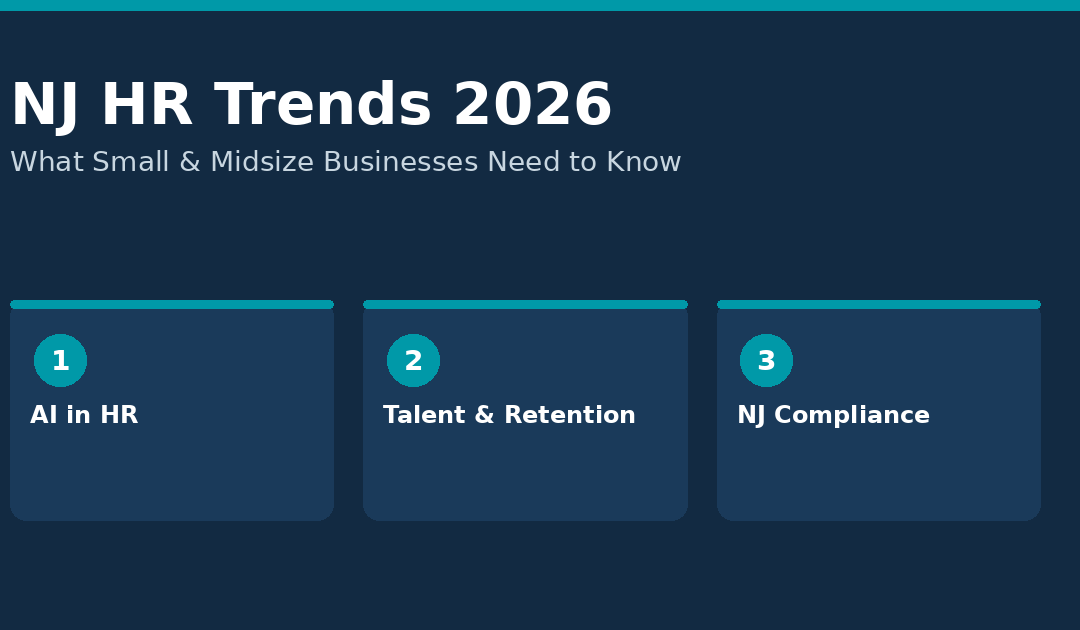
The NJ HR trends shaping 2026 all point to the same three topics coming up again and again for small and midsize business owners — in the news, in conversations with other owners, and in your own inbox. AI in the workplace. The cost of hiring and keeping good people. And yet another round of compliance updates out of Trenton.
None of these are going away. Here’s a quick look at what’s driving each one, and where a second set of expert eyes can save you real time, money, and risk.
1. AI in HR: A Top NJ HR Trend That’s Not a Compliance Shortcut
AI has moved from “interesting idea” to daily reality in HR — research shows small businesses are increasingly using it for payroll, time and attendance, and benefits administration. That’s a good thing when it’s applied to the right tasks.
Where it gets risky is when AI starts influencing decisions about who gets hired, promoted, disciplined, or let go. New Jersey, like a growing number of states, is paying closer attention to how AI is used in employment decisions, and “the algorithm did it” is not a defense that holds up in a wage claim or discrimination complaint. Good AI adoption still requires human judgment, documentation, and oversight behind it.
How we help: Marzano HR Consulting helps businesses figure out where AI genuinely makes HR faster — and where it doesn’t belong anywhere near a final decision. We build in the human checkpoints that keep your business protected while you still get the efficiency gains.
2. Another Key NJ HR Trend: Labor Costs and the Fight to Keep Good Employees
Rising labor costs and the challenge of finding qualified talent remain the top concerns for small business owners heading through 2026. For a lot of NJ businesses, the instinct is to compete on pay alone — but pay is only part of what keeps people from walking out the door.
Engagement, clear growth paths, and a workplace that feels well-run all show up directly on your bottom line. A disengaged team costs you in turnover, lost productivity, and the ripple effect on customers and culture — often more than a raise would have.
How we help: From performance management systems to employee engagement strategy, we help you build a workplace people actually want to stay in — which is a lot cheaper than constantly replacing them.
3. The NJ HR Trend Nobody Escapes: Ever-Changing Compliance Rules
If it feels like NJ compliance requirements shift every few months, that’s because they do. Employee separation reporting just became mandatory for every NJ employer. Wage-and-hour enforcement in this state carries some of the toughest penalties in the country, and a single misclassified employee or missed overtime calculation can mean years of back pay exposure. Add ongoing changes to paid leave and pay transparency rules, and it’s a lot for any business owner to track on top of actually running the business.
How we help: This is where a NJ-based HR consultant earns their keep. We stay on top of state-specific changes as they happen — not months later — and translate them into what you actually need to do: updated handbooks, corrected classifications, and policies that hold up if you’re ever audited or challenged.
Why These NJ HR Trends Matter for Your Bottom Line
AI, retention, and compliance all sound like separate issues, but they add up to the same question every NJ business owner is asking: How do I keep growing without something blowing up on the HR side?
You don’t need a full-time HR department to keep up with these NJ HR trends. You need the right expert in your corner when it matters.
Have a question about where your business stands on any of these? Let’s talk.
Frequently Asked Questions
Pay matters, but engagement, clear growth paths, and consistent performance management often do more to keep people than a raise alone. Businesses that invest in structured feedback, recognition, and career development tend to see lower turnover than those competing on salary alone. AI can support HR processes like screening resumes or scheduling, but New Jersey — like a growing number of states — is increasing scrutiny on how AI influences employment decisions. Final hiring, promotion, discipline, and termination decisions still need documented human judgment behind them. Relying on AI alone can expose a business to discrimination or wrongful termination claims. The three biggest are AI adoption in HR functions (and the compliance risk that comes with it), rising labor costs paired with retention challenges, and frequent changes to New Jersey compliance requirements — including the new mandatory employee separation reporting and ongoing wage-and-hour enforcement.